
When Do You Need a Life Coach? Knowing the Right Time to Get Help
When Do You Need a Life Coach? Knowing the Right Time to Get Help
Everyone has heard of a life coach, but few people really know what one is or what they actually do. Many assume life coaching is reserved for rich people and high performers. But, the truth is, life coaching is for everyone. There are coaches out there for every goal, life stage, challenge, and budget.
At its core, a life coach is simply someone who helps you reach your goals. They provide guidance, tools, accountability, and support to help you create a plan, overcome obstacles, and make meaningful progress toward the life you want. It sounds simple, but it's often the missing piece standing between where you are now and the life you're trying to create.
But how do you know when you actually need that kind of support? With self-help books, podcasts, therapy, online courses, and countless personal development resources available today, it can be really hard to know whether life coaching is the right next step.
That's exactly what we're going to explore today. By the end of this guide, you'll have a clear understanding of what a life coach does, who can benefit from coaching, and how to determine whether it's the right fit for you in this season of life.

When Do You Need a Life Coach? Knowing the Right Time to Get Help
There are a lot of reasons people consider hiring a life coach. Whether you're looking to change careers, build confidence, develop healthier habits, strengthen your relationships, or simply enjoy life more, a life coach can help you create a plan and stay accountable as you work toward your personal and professional goals.
That said, life coaching isn't for everyone. Depending on your situation, there may be other resources that make more sense. For example, if you're struggling with trauma, severe anxiety, depression, addiction, or other mental health concerns, a licensed therapist may be a better fit. And if you're simply looking for guidance, motivation, or a new perspective, self-help books, podcasts, and personal development courses can also be valuable tools. Life coaches help people move forward, but they aren't trained to diagnose or treat mental health conditions.
If you're not sure whether a life coach is the right fit for you, you've come to the right place. You can always contact me, a certified life coach, directly for a quick answer. But, in the meantime, let's take a closer look at the signs that coaching could be exactly what you need in this season of life.
What Does a Life Coach Actually Do?
Helps you clarify your goals and find purpose.
Sometimes, you’re not sure what you want—you just know that something needs to change. A life coach can help you identify meaningful, achievable goals. And they’ll make sure that those objectives align with God’s vision for your life as well as your personal values, priorities, and beliefs.
Creates a clear action plan for your success.
We can stay really busy and never make any progress toward our actual goals. That’s because our aspirations take organization, focus, and manageable steps. But for many, that whole process is really overwhelming! A life coach can help you create clear action plans and realistic timelines that help you hit milestones and step closer to your dream outcome.
Teaches you practical tools for decision-making and problem-solving.
No matter your objective, you wouldn’t be talking to a life coach if you could get there on your own. The truth is, the road to our goals is full of setbacks, difficult decisions, and even direct attacks from the enemy. A life coach helps give you frameworks and skills to navigate even the biggest challenges.
Provides accountability and structure.
For the first 20 or so years of our lives, we have built in accountability. School. Teachers. Youth leaders. Sports coaches. There are people everywhere making sure we make progress and stay on target. However, after college, that all goes away! A life coach brings that back into your life, so you can actually follow through on your commitments and goals.
Identifies God-limiting beliefs and negative thought patterns.
Sometimes the biggest thing holding us back isn't a lack of planning, accountability, or clear goals—it's our limiting beliefs. We can begin to think we're unworthy of the gifts God has given us or that He hasn't equipped us with the skills, resources, or opportunities needed to accomplish what He's called us to do. A life coach can help you uncover unhelpful beliefs, unfaithful thinking, and self-sabotaging behaviors that may be holding you back while developing more productive, God-honoring thought patterns.
Challenges your assumptions and pushes you out of your comfort zone.
Let's be honest: growth is uncomfortable. Sometimes God calls us into situations that stretch us, challenge us, and force us to rely on Him in new ways. A life coach can help you navigate those seasons, embrace necessary discomfort, and remain open to opportunities you may have otherwise overlooked. Instead of resisting change, you'll learn how to move through it with purpose and confidence.
Keeps you focused and consistent with your goals.
There are a lot of reasons people get distracted and abandon their goals. Whether you're struggling to stay committed during a difficult season or constantly finding yourself pulled in a new direction, it's easy to get derailed. A life coach helps you stay committed to the process, push aside distractions, discern God's direction, and remain consistent even when life isn't perfect.
Provides an outside perspective you can’t always see on your own.
It's hard to see the full picture when you're living it. Emotions, fear, stress, and even excitement can cloud our judgment and make it difficult to recognize what's really going on. A life coach provides an objective outside perspective, helping you identify blind spots, recognize opportunities, and see situations more clearly. Sometimes the breakthrough you're looking for isn't a new strategy—it's simply a fresh perspective from someone who can see what you can't.
Signs You Might Need a Life Coach
Sometimes it's obvious that we need help moving forward. Other times, we just have a nagging feeling that we're meant for more but aren't sure how to get there. If you've been feeling stuck, overwhelmed, unfulfilled, or uncertain about your next steps, you're not alone.
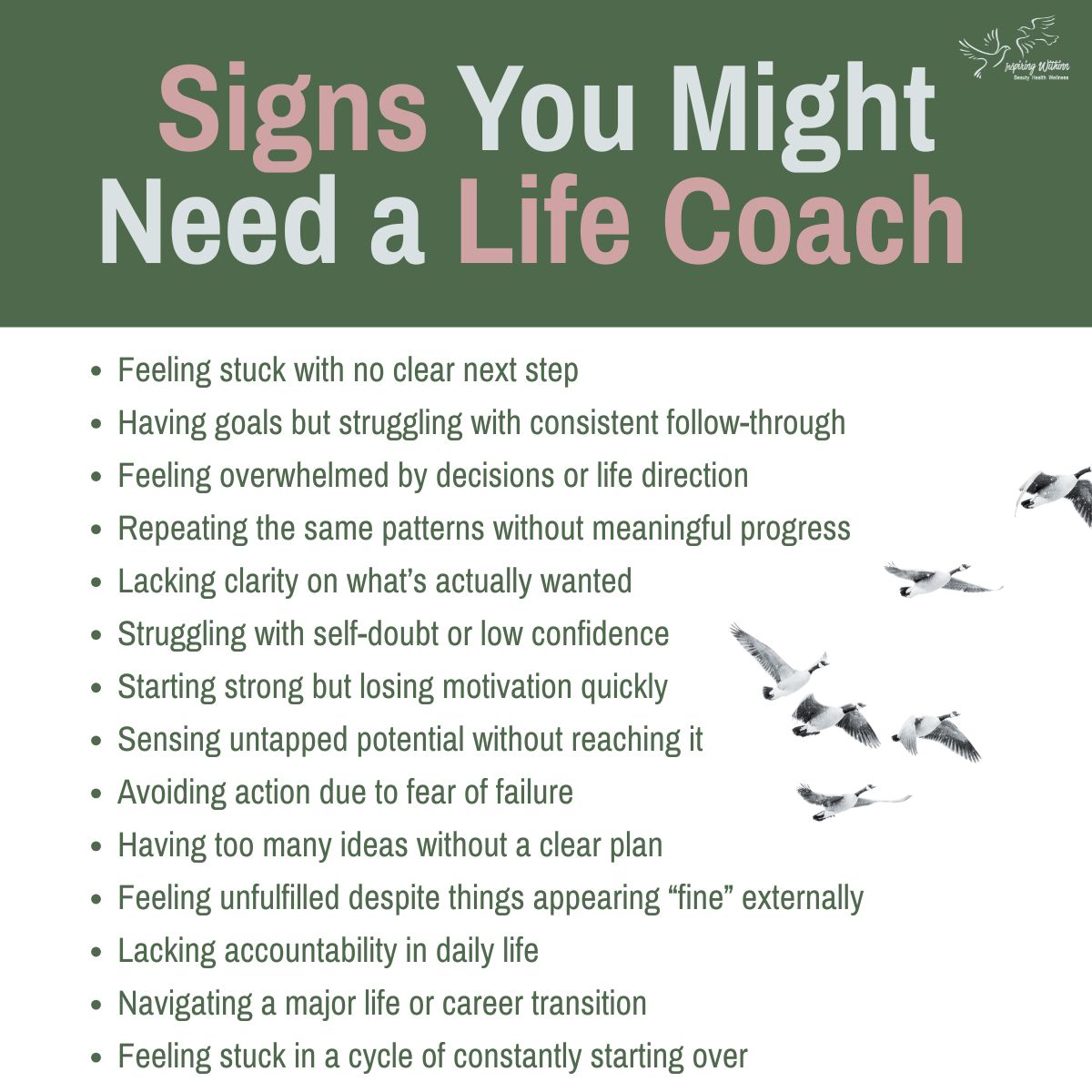
Here are some signs that a life coach's unique guidance, support, and accountability could be exactly what you need in this season:
Feeling stuck with no clear next step
Having goals but struggling with consistent follow-through
Feeling overwhelmed by decisions or life direction
Repeating the same patterns without meaningful progress
Lacking clarity on what’s actually wanted
Struggling with self-doubt or low confidence
Starting strong but losing motivation quickly
Sensing untapped potential without reaching it
Avoiding action due to fear of failure
Having too many ideas without a clear plan
Feeling unfulfilled despite things appearing “fine” externally
Lacking accountability in daily life
Navigating a major life or career transition
Feeling stuck in a cycle of constantly starting over
Benefits of a Life Coach
Working with a life coach doesn't just help you accomplish goals. It can completely change the way you approach your life! With the right guidance, you'll gain greater clarity, confidence, and direction while making steady progress toward God's best for your life and the future He has placed on your heart.
Here are some of the benefits people often experience through life coaching:
Greater clarity and direction
Clear, actionable plan for goals
Increased accountability and follow-through
Stronger confidence and self-belief
Improved decision-making skills
More consistent habits and routines
Faster progress toward goals
Better ability to overcome obstacles
Healthier mindset and thought patterns
Increased motivation and focus
Greater sense of purpose and fulfillment
Improved work-life balance
Reduced overwhelm and stress
Alignment between faith, values, and everyday decisions
Long-term personal growth and development
Life Coach vs Therapist: What’s the Difference?
There's a lot of confusion about the difference between a life coach and a therapist. To be clear, life coaches are not licensed therapists. However, they are trained and certified to help people set goals, create action plans, overcome obstacles, and move forward with greater clarity and confidence.
Here are some key differences:
Focus of the Work
A life coach focuses on future goals, personal growth, and forward momentum. Their role is to help you clarify where you want to go, create a plan to get there, and stay accountable along the way. A therapist, on the other hand, often focuses on healing past experiences, processing emotions, and addressing mental health challenges. While many therapists are also solutions-oriented and help clients move forward, they are trained to diagnose and treat mental health conditions.
A life coach cannot diagnose, treat, or provide therapy for mental health disorders. They instead help people who are already equipped to move forward with their lives. According to the International Coaching Federation (ICF), coaching is designed to help people maximize their personal and professional potential through a thought-provoking and creative process.
Primary Purpose
The purpose of a therapist is to help people process emotions, heal from trauma, and work through psychological patterns that may be impacting their mental health and quality of life. They are trained to diagnose and treat mental health conditions while helping clients develop healthier ways of thinking, feeling, and coping.
A life coach, on the other hand, helps people create plans to reach future goals. They may help you work through limiting beliefs, confidence issues, fear of failure, and other personal obstacles that are holding you back, but not to the same depth or clinical level as a therapist. Instead, their focus is on helping you move forward, take action, and make meaningful progress toward your goals.
Approach
The biggest difference between life coaching and therapy is often the approach itself. Life coaching tends to be action-oriented, goal-driven, and focused on accountability. Sessions often revolve around setting milestones, curating action plans, overcoming obstacles, discerning God’s will, and identifying the next steps needed to move forward.
Therapy is a lot more reflective and treatment-based. Depending on the therapist and therapeutic method, sessions involve things like exploring past experiences, processing emotions, identifying behavioral patterns, and addressing underlying mental health concerns. While both can create meaningful transformation, life coaches generally focus on helping clients take action, while therapists focus on helping clients heal.
Topics Covered
In therapy, conversations often go much deeper into emotional and psychological concerns. A therapist may help clients navigate anxiety, depression, trauma, grief, relationship challenges, addiction, and other mental health conditions. Sessions often focus on understanding patterns of thought and behavior, building coping strategies, and fostering lasting mental and emotional health.
During life coaching sessions, the focus is typically more on solutions than root causes. Coaches often spend time discussing careers, goals, daily habits, routines, mindset, productivity, and personal development. A life coach assumes you've resolved any underlying trauma holding you back and instead just need more productive ways of unlocking your potential.
Credentials and Training
Another major difference between life coaches and therapists is their credentials and training. Because therapists work with mental health conditions, trauma, and other high-stakes psychological concerns, they are required to complete extensive education, clinical training, supervised practice hours, and state licensing requirements.
Life coaches do not go through the same clinical training because they aren't providing mental health treatment. Instead, many coaches complete certification programs focused on goal-setting, accountability, communication, personal development, leadership, and behavior change. (I got my certification through the Institute of Integrative Nutrition.)
Many also bring valuable real-world experience from careers, businesses, ministries, or personal journeys that allow them to guide others through similar challenges. This difference in training doesn't make one better than the other. It just reflects the different roles they serve. Therapists are trained to help people heal, while life coaches are trained to help people grow, take action, and make progress toward their goals.
When to Choose Each
As you can see, there's a place for both therapists and life coaches. One doesn't replace the other. They simply help people in different ways and during different seasons of life. If you're struggling with emotional distress, trauma, significant grief, addiction, or mental health concerns, a therapist is likely the best person to help. In fact, the National Institute of Mental Health (NIMH) recommends seeking professional mental health support when symptoms begin interfering with daily functioning, relationships, work, or overall well-being.
However, if you feel generally healthy and well-adjusted but still can't seem to make progress toward your goals, a life coach may be a great fit. Life coaches are especially helpful for people who feel stuck, lack direction, struggle with follow-through, or want support reaching specific fitness, wellness, career, business, relationship, spiritual, or personal growth goals.
At the end of the day, there's nothing wrong with needing support. The key is finding the right kind of support for where you are right now. If you're ready to move forward but need guidance, accountability, and a clear plan, a life coach could be exactly what you're looking for.
How to Choose the Right Life Coach for You
If you’re ready to start your coaching journey, I am here to help! I am a certified life coach that’s helped dozens of men and women just like you reach their full potential and realize God’s best for their lives. You can contact me here!
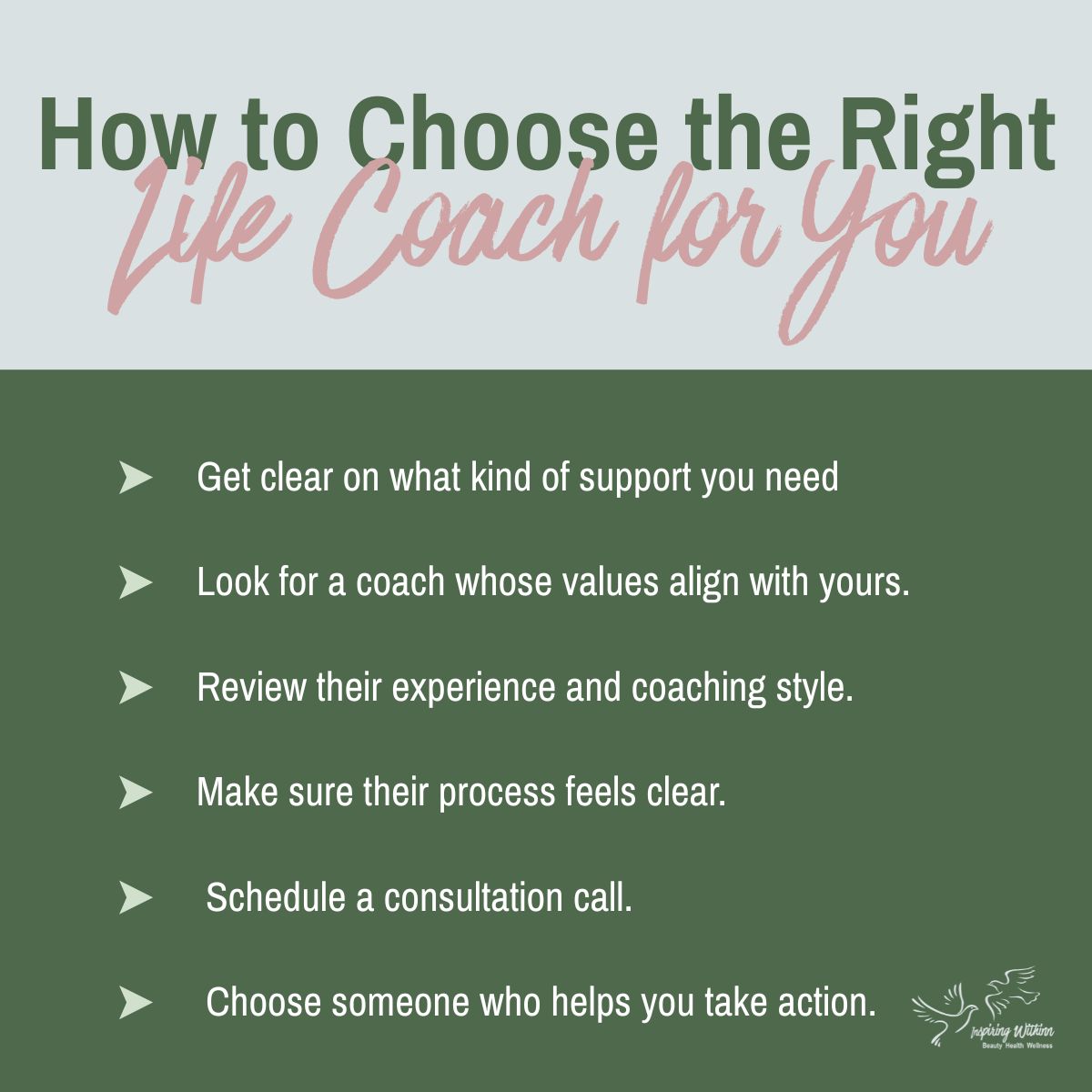
That said, finding the right life coach is about more than credentials. It's about finding someone who understands your goals, shares your values, and can provide the support you need in this season. Not sure where to start? Here are some simple steps that can help you choose the right life coach for you. You can even use them to decide whether I'm the right fit.
Step 1: Get clear on what kind of support you need.
Before choosing a coach, identify what area of life you want help with. This could be career, confidence, faith, relationships, fitness, habits, purpose, or general life direction.
Step 2: Look for a coach whose values align with yours.
The right life coach should understand your goals, but also respect your beliefs, priorities, and worldview. If faith is important to you, look for someone who can help you make decisions that align with your faith, values, and purpose.
Step 3: Review their experience and coaching style.
Look at their background, testimonials, content, or client results. Some coaches are direct and strategy-focused, while others are more reflective, spiritual, or mindset-based.
Step 4: Make sure their process feels clear.
A good coach should explain how they help clients move from where they are now to where they want to be. Look for structure, tools, accountability, and a clear path forward.
Step 5: Schedule a consultation call.
A call helps you see if the coach feels like the right fit. Pay attention to whether they listen well, ask thoughtful questions, and make you feel supported without pressure.
Step 6: Choose someone who helps you take action.
The right coach should not just inspire you. They should help you create practical next steps, stay accountable, and make real progress.
Is Life Coaching Worth It?
Yes! As they say, there’s no better investment than the one you make in yourself. (I’ll take that a step further to say there’s no greater investment than the one you make in your spiritual and personal growth.) The truth is, most people don’t lack information. There are SO many books, podcasts, and other resources out there that tell you how to be the best version of yourself. The challenge is applying it and staying committed long term. That’s exactly where a life coach like me can help!
I can help you turn good intentions into action. I can provide clarity when you're overwhelmed, accountability when your motivation fades, and encouragement when obstacles appear. For many people, life coaching shortens the gap between where they are and where they want to be. Instead of spending years second-guessing decisions, getting distracted, or trying to figure everything out alone, they have someone helping them stay focused on what matters most.
If you’re ready to unlock your full potential and build the future God has put on your heart, message me on Instagram or send me an email. Let’s see what we can achieve together!
A life coach will help you become the person God designed you to be.
If there's one thing I hope you take away from this article, it's that there's nothing wrong with needing support. We all have seasons where we feel stuck, overwhelmed, uncertain, or simply in need of someone to help us see the next step more clearly.
The good news is that you don't have to figure it all out on your own. The right life coach can provide the guidance, accountability, and perspective needed to help you move forward with confidence and purpose.
If you're wondering whether life coaching is right for you, I'd love to connect. Together, we can determine whether coaching is the support you need in this season of life.
